
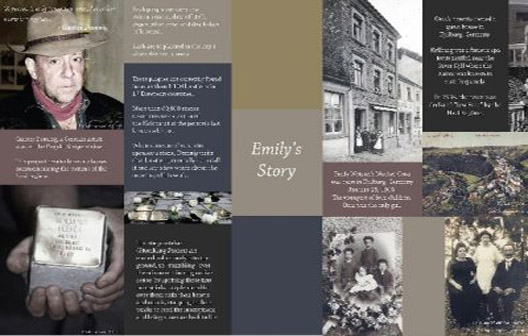
OVERTURNED: A LIFE ETCHED IN STONE (temporarily removed)
An exhibit of one woman’s journey through her family’s history, entangled in the Nazis’ efforts to persecute and eliminate Jewish German citizens. Emily’s story is accompanied by a brief history of the Stolpersteine Project (Stumbling Stones).
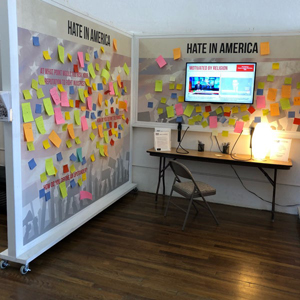
HATE IN AMERICA
This interactive exhibit focuses on the history of hate in America and describes what constitutes hate crimes. It outlines what it means to become an upstander.
Learn more...
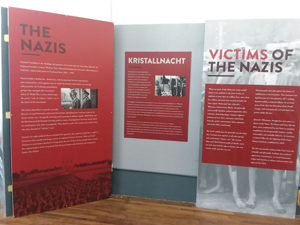
WITH EVIL INTENT
This exhibit covers the Holocaust through an exploration of underlying causes including pseudo-science, eugenics, and scientific racism.
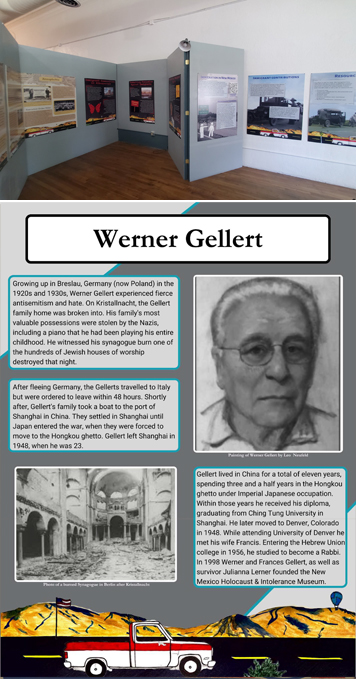
FROM ROUTES TO ROOTS:
IMMIGRATION & REFUGEES IN THE LAND OF ENCHANTMENT
An exhibit developed in collaboration with La Cueva High School of Albuquerque
From Routes to Roots is NMHIM’s most expansive student-curated exhibit to date. This exhibit explores the personal and collective stories of immigration and refugees, locally and globally, from modern migration in New Mexico and Albuquerque to Jewish displacement during the Holocaust. Highlights include artifacts from museum founder Werner Gellert’s time in the Shanghai refugee camp, displayed in collaboration with the collections team.
Through photographs, oral histories, and student art, From Routes to Roots invites visitors to consider immigration not as a statistic or policy debate, but as a human experience shaped by loss, hope, and resilience.
Learn more...

AFRICAN AMERICAN EXPERIENCE
PHASE 2: SLAVERY 1866 through 1945
Phase 2 of 3 examines the after effects of slavery from emancipation and reconstruction to the end of World War II and the beginning of the Civil Rights movement.
PHASE 3: COMING SOON
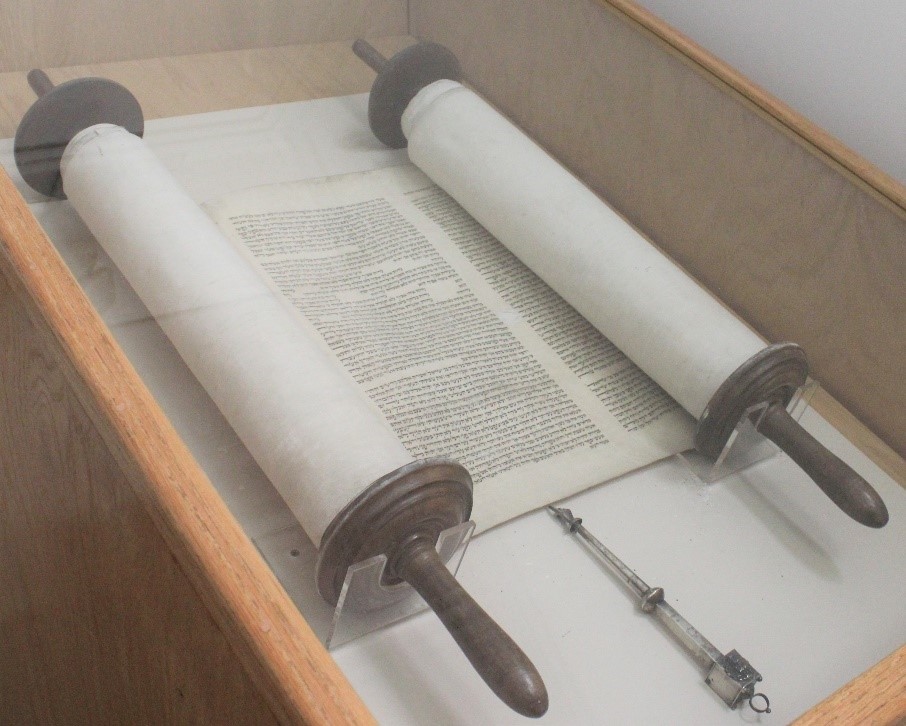
CZECH TORAH
Our scroll, also known as MST#666, is one of 1,564 scrolls collected from Jewish communities in the Czech Republic devastated by the Holocaust. They were stored in Prague through the end of World War II until their rescue in 1963 by the Memorial Scrolls Trust in London.
Learn more...
GENOCIDE OF CHRISTIAN MINORITIES IN THE OTTOMAN EMPIRE
This exhibit examines the systematic slaughter of Armenians, Assyrians, and Greeks as part of an effort to “Turkify” the country’s minorities. Between 1915 and 1923, the Christian populations of Asia Minor (present-day Turkey) were systematically annihilated by the Young Turk government: 750,000 Assyrians, 1.5 million Armenians, and 350,000 Greeks were slain.
Learn more...
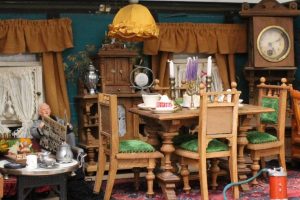
HIDDEN TREASURES
Hidden Treasures is a gift of Holocaust survivor Lilo Lang Waxman (7/25/1920 -11/23/2018) and is comprised of five “room boxes” and over 500 individual miniatures. These room boxes contain many incredible details of late 19th and early 20th century Jewish domestic life in Germany.
Learn more...
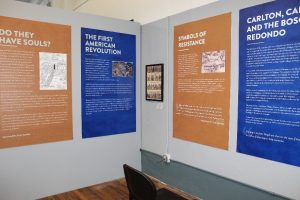
COLONIZATION: RACISM AND RESILIENCE
This exhibit addresses the history and effects of systemic racism by Spanish and American colonists, their effects on the Native populations of New Mexico, and how those populations resisted and survived.